
Bleckley County Court Records After Arrest
Bleckley County is in Georgia's Oconee Judicial Circuit. After a jail arrest, the jail enters booking charges from the warrant, citation, warrantless-arrest paperwork, or other agency document. Those booking charges are not always the final charges in court. The Oconee Judicial Circuit District Attorney reviews many criminal matters and decides whether to file, reduce, amend, dismiss, accuse, or present charges for indictment. Once filed, the case record becomes the court track for hearings, motions, pleas, trial, sentencing, dismissal, or other disposition.
The local source trail starts with the Bleckley County government site, the county officials page naming Sheriff Daniel Cape, and the City of Cochran District Attorney page that points criminal prosecution matters to the Oconee Judicial Circuit. Those pages do not replace the clerk or re:SearchGA, but they help separate sheriff custody questions from prosecutor and court-record questions.
The jail side and the court side should be kept separate. The jail record answers custody and booking questions, including whether someone is held, bonded, transferred, or released. The court record answers charge and case questions. For the custody side, use Bleckley County jail inmate records. For booking photos, use Bleckley County jail mugshots. Court records after a jail arrest are searched through court and clerk channels, not through a mugshot gallery.
Search Court Records After Arrest
The statewide court search route identified in research is re:SearchGA Court Records Search. It can be used to search by case number or party name where Bleckley records are available through the portal. Some document images or deeper access may require registration, payment, court permission, or clerk help. The Georgia Superior Court Clerks' Cooperative Authority is also a statewide authority for court-record and eCertification context.
- Start with the jail booking date, arresting agency, and name spelling from the booking record if those details are available.
- Search re:SearchGA by defendant name. If there are many results, narrow by county, court, case type, or filing-date range near the arrest.
- Search by case number if the jail, warrant, citation, clerk, or court document gives one.
- Open the public case entry and compare the filed charge list with the jail booking charges.
- Contact the clerk for older files, certified copies, document images not online, or access restrictions.
The re:SearchGA court case search interface appears in the image below.
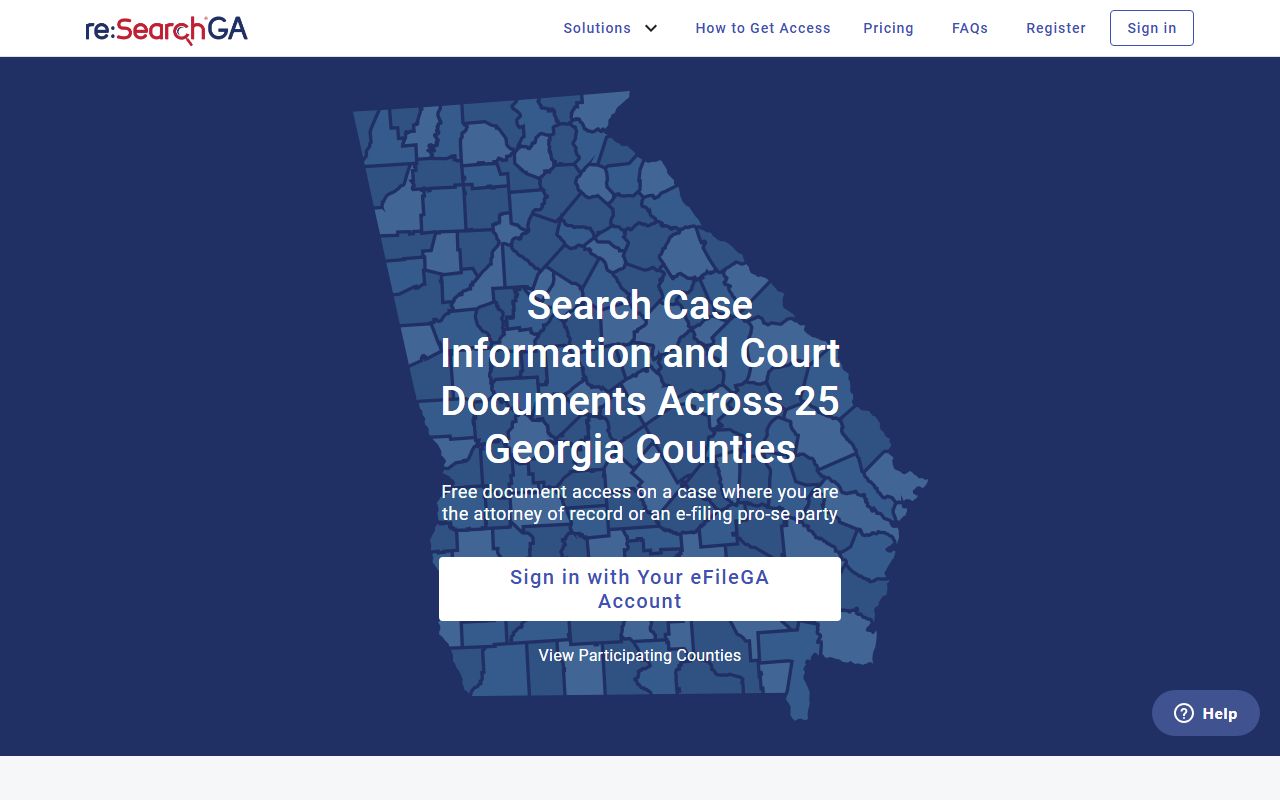
The search portal is a court-record tool, so it should be paired with sheriff or jail records when custody status is the main question.
Bleckley Court Search Fields
The court search fields captured for re:SearchGA support both exact and broader searches. Case number is best when known. Party name is more common after a fresh arrest, but spelling, middle initials, and date filters can matter. If the case is not yet filed, the jail booking may exist before the searchable court case appears.
| Field Label | Type | Required | Options / Notes |
|---|---|---|---|
| Search by Case Number | Text | Optional | Best if the exact case number is known. |
| Search by Party Name | Text | Optional | Use defendant last and first name; spelling matters. |
| Attorney / Business / Judicial Officer | Text | Optional where exposed | Useful for broader searches. |
| Location / Court | Dropdown | Optional | Select statewide or the relevant county or court where available. |
| Case Category / Type | Dropdown | Optional | Narrows criminal, traffic, civil, and other case types. |
| Date Filed Range | Date fields | Optional | Use a range near the arrest date for common names. |
Charging Documents After Arrest
Charges can enter the court record in several ways. A fresh jail booking is based on arrest paperwork, but prosecutor review may change the charge list. Felonies commonly move through superior court, while misdemeanors, traffic, local offenses, and some preliminary matters may appear in other court channels depending on the charge and local structure. The City of Cochran's District Attorney information confirms that felony and certain misdemeanor cases in the city are prosecuted in Bleckley County Superior Court through the Oconee Judicial Circuit, with the DA main office phone listed as 478-374-3482.
| Document | Filed By | Common Use | Why It Matters |
|---|---|---|---|
| Complaint | Officer, court, or prosecutor depending on process | Initial charge path and some misdemeanor matters | May explain probable cause or the first formal allegation. |
| Information / Accusation | Prosecutor | Prosecutor-filed charges where authorized | Can replace, refine, or formalize booking charges. |
| Indictment | Grand jury | Felony matters presented for grand-jury action | Shows formal charges returned by the grand jury. |
Bleckley Charge Status Records
Charge status terms show how the case has moved since the arrest. A charge may remain pending, be amended, be reduced, be dismissed, be bound over, be indicted, or receive a final disposition. A charge is not a conviction until there is a guilty plea, verdict, or other adjudication of guilt. The court docket is the better source for that status than a jail roster, which often reflects the intake stage.
| Status | What It Means |
|---|---|
| Pending | The charge has been filed and remains unresolved. |
| Amended | The filed charge changed from the original wording or count. |
| Reduced | The charge moved to a lesser offense or lesser count. |
| Dismissed / Nolle Prosequi | The prosecutor or court ended the charge without a conviction on that count. |
| Bound Over | A lower-court matter was sent to a higher court. |
| Disposition | The final case outcome, such as plea, verdict, sentence, dismissal, or transfer. |
Bond Records After Arrest
Bond is controlled by the court process, even though the jail may process release paperwork. Georgia Code section 17-6-1 is the core Georgia bail authority for bondable offenses and release conditions. The court record may show the bond order, while the jail can confirm whether the person is still held, whether a no-bond hold exists, and whether another agency hold blocks release.
| Bond Type | How It Works |
|---|---|
| Cash Bond | The full amount is paid in an accepted form, subject to local rules. |
| Surety Bond | A licensed bonding company posts bond for a fee. |
| Property Bond | Real property secures the bond where accepted and approved. |
| Recognizance Bond | Release is based on a promise to appear and comply with conditions. |
| No-Bond Hold | Money alone will not release the person until the court or holding agency acts. |
Warrants Before Jail Arrest
No accessible official active-warrant search page was verified for Bleckley County. The county-linked sheriff arrest and warrant page was blocked, and commercial warrant aggregators should not be used as proof of an active warrant. For warrant questions, call the Bleckley County Sheriff's Office, search court records if the warrant came from a case, or contact the issuing court. A bench warrant may come from failure to appear. A probation or parole warrant may come from supervision authority. A fugitive warrant or hold may come from another county, state, federal agency, or ICE.
A warrant arrest can affect bond. One charge may have bond while another hold blocks release. Ask the jail which court or agency issued the hold, whether bond is set, and whether a voluntary court appearance is possible. For legal strategy, use counsel rather than agency staff because the sheriff, clerk, and prosecutor cannot give legal advice to a defendant.
Charges vs Convictions
A court record after an arrest may show charges long before it shows a conviction. That difference matters for employment, housing, licensing, and personal decisions. A charge is an allegation. A conviction is a final guilt outcome by plea, verdict, or other adjudication. A dismissed charge, a nolle prosequi entry, or an amended count should be read by status and date, not treated as the same thing as a conviction.
| Charge | Conviction | |
|---|---|---|
| Stage | Accusation or filed count | Final guilt outcome |
| Proof Level | Probable cause or prosecutor filing decision | Guilty plea, verdict, or adjudication |
| Can Change | May be amended, reduced, added, or dismissed | Changes through appeal, modification, pardon, or other legal process |
Sealed Restricted Court Records
Georgia often uses the term record restriction rather than expungement for many criminal-history issues. O.C.G.A. section 35-3-37 is the main Georgia criminal-history restriction statute. Restriction can affect what appears in public criminal-history dissemination, but it does not always erase every court, agency, or jail record in the same way. Juvenile records, sealed cases, active investigations, victim information, medical information, and protected personal data may also be withheld.
| Restricted / Sealed | Expunged | |
|---|---|---|
| Public Visibility | Hidden or limited from many public views | Often used to mean removed or treated as unavailable, but Georgia terminology varies by record type |
| Agency Access | Some agencies may retain limited access | Depends on the order, law, and record system |
| Eligibility | Often tied to dismissal, non-conviction, or qualifying dispositions | Must be confirmed under Georgia law and the court record |
Record Use Limits
Public court lookup is not the same as an FCRA-compliant background check. Casual searches may miss sealed, restricted, amended, transferred, or corrected records. They can also show charges without final outcomes. Use official court records, certified copies, and authorized criminal-history channels when a formal legal or regulated decision is involved.
Important: Do not use jail, court, or custody lookup information for FCRA-regulated decisions such as employment, credit, housing, or insurance.